






Mayor Wayne Brown welcomes possible Govt move to ban homeless from Auckland CBD
Mayor Wayne Brown says he welcomes any Government law change to empower police to forcibly move homeless out of Auckland’s city centre - insisting it’s the Prime Minister’s job, not his, to eliminate the city’s “scruffy” characters.
Brown told the Herald Auckland Council has done all it can to solve the problem of rough sleepers’ intimidating, drunken behaviour in the city centre, but the bylaws available to him are weak.
“I had to put up with the Prime Minister telling me that the town is scruffy. The town looks good, but the people in it are scruffy,” Brown said.
“The thing is that we’re [Auckland Council] responsible for places. But the Government makes the rules about people’s behaviour. It’s a people problem. Bylaws are a very weak thing.
“I’ve spent half a million of my mayoral budget on supporting Māori wardens and council approval staff. The people out there [in the CBD] that they’re dealing with know that they can’t arrest them. It’s pretty frightening.”
The comments from Brown come after Government ministers confirmed this week they are considering possible legislation to give police new powers to move homeless people out of Auckland’s city centre.
On Thursday, Justice Minister Paul Goldsmith confirmed a proposal for a move-on order was among the recommendations delivered to ministers by the Ministerial Advisory Group for Victims of Retail Crime.
Speculation around whether the Government was considering a law change to ban homeless people from the Auckland CBD – of which there are an estimated 800 – began on Tuesday, when Luxon was questioned about it by Labour in the House.
After a week of questioning by the media, Luxon indicated yesterday on Newstalk ZB that the Minister for Auckland, Simeon Brown, has “started to convene” with all the various agencies responsible for the Auckland CBD: Auckland Council, government agencies and NGOs.
“Yes, people have then leaked those conversations out to the media,” Luxon said.
“We should look at bylaws, we should look at move-on powers, we should look at all sorts of things. If you’re going to put a move-on power, you need to look at how you’re going to support that individual so you’re not just moving that individual into another part of the city.
“We have to sort this CBD out … it’s not good.”
Brown said he had no problem with such possible Government intervention and it was “exactly what they [the Government] should be focusing on”.
“No [problem], not at all. I mean, if they clean up Queen St, that’s bloody fine,” Brown said.
“I’m telling you [Prime Minister Christoper Luxon], that’s your job, mate. It’s not mine. I’ve made it nice. We’ve put planting in there. We’ve done all our other [stuff]. You go down there on a nice day and there’s no one bad around, it’s actually quite a nice place.”
Goldsmith said while the Ministerial Advisory Group for Victims of Retail Crime had been given suggestions, they had “made no decisions yet and all options are on the table”.
“I think everybody’s conscious of the fact that in terms of the CBD in Auckland, there’s a lot of antisocial behaviour and widespread concern amongst people who live there and work there,” Goldsmith said.
The policy hasn’t been included in any Cabinet paper, which would most likely need to be agreed to by the four ministers with responsibility for the issue: Goldsmith, Police Minister Mark Mitchell, Housing Minister Chris Bishop and Associate Housing Minister Tama Potaka.
But Brown said it would be entirely feasible to have police move intimidating individuals to another, less high-profile location where the social and economic impact of their presence is reduced.
“Well, I think they go out into the countryside,” Brown said of a possible location for downtown Auckland’s homeless.
“The other part about it is the economic damage they do. [It] depends on where they’re doing it. I mean, if there’s a scruffy-looking person sitting outside a pub in Ngāruawāhia right now, it’s probably not enchanting, but it’s probably not closing off wealthy foreign tourists from spending a lot of money here. So the economic damage depends on where you are.”
In October, the business association for Auckland’s city centre “reluctantly” released a scathing survey that found store owners and offices believe homelessness, too few police, “neglect and disorder” and “frightening” antisocial behaviour are crippling their trade.
Among the most dire findings was 91% of operators saying rough sleepers and begging were affecting their business, and 81% believing the city centre was not in a good state to attract significantly more people and investment.
Brown said he greatly sympathised with the traders on Queen St.
“It’s a high-value area. They pay a lot of rates and they like to sell a lot of expensive s***.
“They should be able to, and they’ve been prevented by a whole lot of people who are not contributing to the economy, but who are being funded from the economy. The Government has to work out how they can connect giving them money and having some impact on them.
“You know, [for example] ‘we won’t give you any money if we find you sleeping in the street’ ... There’s plenty of freedom camping places they can go to.”
The city mayor was also not bothered by an apparent lack of communication between himself and the relevant Government ministers regarding discussions on any potential law change to remove the central city’s homeless population.
“I don’t need to hear from the Prime Minister or the Police Minister on that, they just do their job. They don’t have to consult the mayor. I mean, I’m sure he doesn’t expect me to ask him about where to put a bloody public seat for people to sit on.
“Simeon [Brown] to his credit, has shown up to represent the Government, but there’s about 15 different ministers who’ve got a say in this.”
Brown said he did speak with the Minister for Auckland, Simeon Brown, about the Government discussions last week.
Brown also said he himself had been subjected to intimidating behaviour recently while walking through the “lovely” Fort St pocket park, which Auckland Council installed.
“If you happen to be there when there’s nobody in it or there’s nobody nasty in it, it’s quite an appealing place to sit there in the sunshine and have a coffee and your lunch.
“But if there happens to be two big, ugly, angry drug dealers sitting on the bench, not surprisingly [it isn’t appealing]. Particularly when I went there last time, a very large fellow told me that I should f*** off, so I took his advice.”
National MP Ryan Hamilton’s member’s bill is also in the ballot, which would give police the ability to move people on from an area if their presence was causing distress, disorder or a nuisance.
As with most member’s bills, it already has the support of the National caucus, which would include the four ministers charged with drawing up a Cabinet paper.
If Goldsmith and his colleagues were to draft a proposal, it would need to go out to consultation with coalition partners Act and NZ First.
Sources in these parties seemed unaware of a move-on order proposal, only hearing about it on Tuesday when Labour leader Chris Hipkins started probing Prime Minister Christopher Luxon about it in the House.
If the two coalition partners agreed on the proposal, it could then be drafted into legislation and passed. However, it is not clear that they do.
====================================================

💡 A Little Brain Buzz for You⚡
I have two faces, but show you only one.
I once had guests, but now have none.
I’m rarely bloody and seldom blue.
I’m often promised and sometimes new
(Trev from Tamatea kindly provided this head-scratcher ... thanks, Trev!)
Do you think you know the answer? Simply 'Like' this post if you know the answer and the big reveal will be posted in the comments at 2pm on the day!
Want to stop seeing these in your newsfeed?
Head here and hover on the Following button on the top right of the page (and it will show Unfollow) and then click it. If it is giving you the option to Follow, then you've successfully unfollowed the Riddles page.


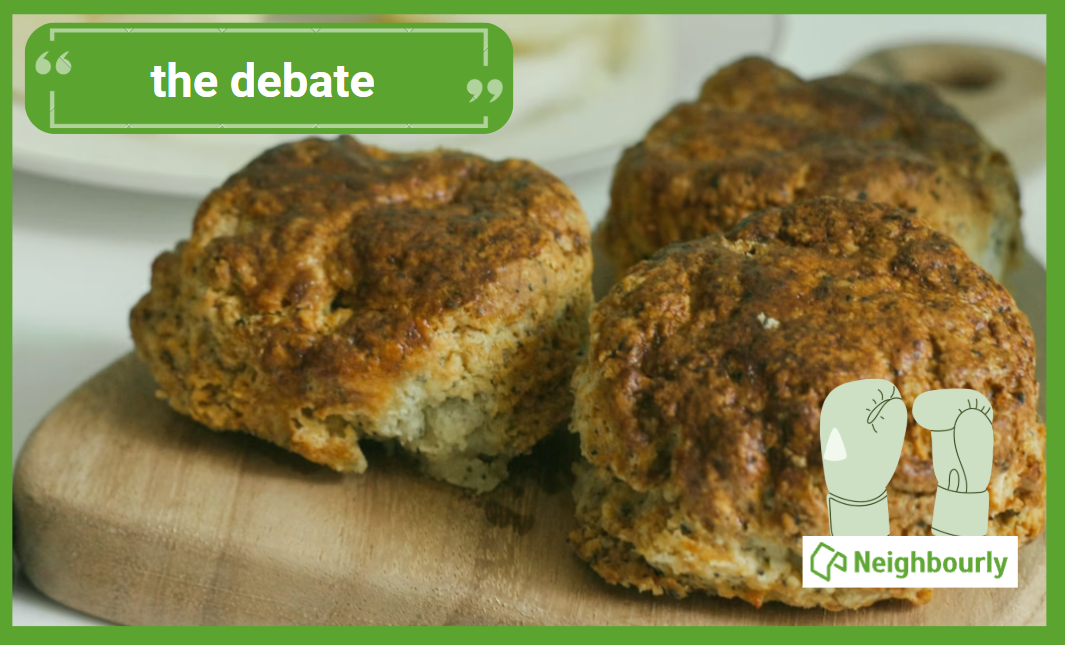
Poll: Does a savoury scone require cheese on top, or folded inside?
Help settle the great kiwi debate ... cheese on top, or folded inside?
-
76.5% Inside!
-
23.5% On top!
Poll: Are you still heading to your local for your caffeine fix, or has the $$ changed your habits? ☕
Auckland has a thriving cafe culture, but with costs climbing, that culture is under pressure. We’ve seen the headlines about recent closures across the country, and it’s a tough pill to swallow along with a $6+ coffee.
We all want our favourite spots to stay open, but we also have to balance our own budgets ⚖️
We want to know: How are you handling the "coffee math" in 2026? Are you still heading to your local for a chat and a caffeine fix, or has the cost of living changed your habits?
Keen to read more about "coffee math"? The Post has you covered.

-
42% I avoid spending money on coffee
-
41.6% I still indulge at my local cafe
-
16.4% Irrelevant - coffee is not for me
 Loading…