






Growing Your Own Linen
Linen has been used for thousands of years for clothes, beding and furnishings. It is loved for its soft and cool feel. It is a very strong and durable material which will last much longer than other alternatives, like cotton. Growing your own linen may see overwhelming, but it helps to break it down into manageable steps.
Plant 1 kg. fibre flax seed in a 6m x 6m plot
One plot will give you enough fibre to make a shirt from line (long linen fibres) and tow to weave a couple of towels. Your actual yield will depend on growing conditions, how well you weed the plot and how perfect your retting and hackling techniques are.
Broadcast the seed thickly, over well tilled ground and then walk on it to firm the seed in.
Weed it well about 4 weeks after planting.
Your flax will take about 2 weeks to germinate in a cool, wet spring. When it reaches just over 5cm in height you should walk into the plot and weed it well. You can step on the plants without damaging them when they are between 5cm and 30cm tall.
Admire the blue flax flowers as the linen grows
Once the bed has been weeded well, you can just admire it as it grows. About 60 days from planting the flowers start to open. It is very beautiful watching the blue flowers swaying in the breeze. Each flower is open for only one day. Each stock produces several flowers and each flower turns into a seed boll with 6 to 8 seeds.
100 days after planting, harvest the flax
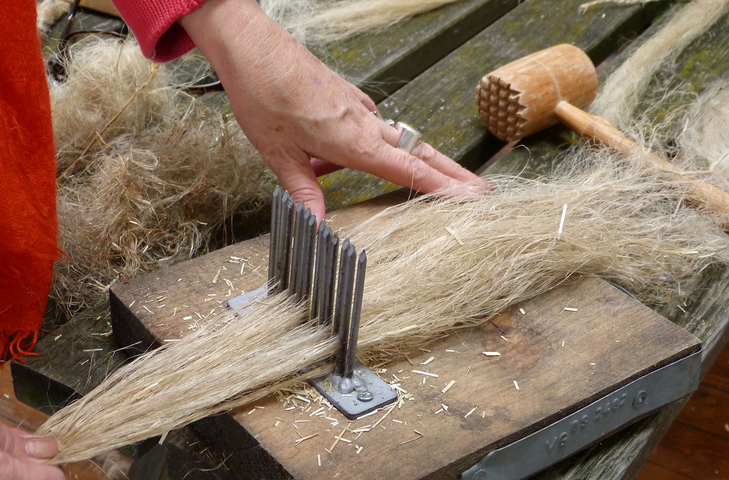
The stocks of flax will be 2/3rds yellow and 1/3rd still green when it is ready to harvest. The flowering will be finished and each slender flax plant will have 4 to 6 seed bolls. You harvest the flax by hand, by pulling each plant out by the roots. Toss the weeds and place the stems of flax in order. Tie into bundles (shooks) about 30cm across, using strong twine.
See the whole method here: www.curtainclean.co.nz...


Poll: Should we ditch daylight saving? 🕰️
First introduced in New Zealand in 1927 with the passing of the Summer Time Act, it's what we know as 'Daylight Saving' and this year it ends on the first Sunday in April.
While we do get to sleep in this time around, some people would like to scrap the clock tinkering for good.
And why? Some evidence suggests the time changes are bad for our health as they mess with sleep patterns leading to short-term fatigue and affecting mood. Meanwhile the hour change is frustrating for farmers and a nightmare for getting the littlies to sleep. But what's your take?

-
39.3% Yes - get rid of the clock changes
-
58.7% No, I enjoy it
-
2% Other - I'll share below

Alan and Hazel Kerr share Senior New Zealander of the Year Award 2026
Dr Alan and Hazel Kerr describe themselves as ‘just ordinary old Kiwis’, despite being named as the 2026 Ryman Healthcare Senior New Zealanders of the Year Te Mātāpuputu o te Tau.
The amazing couple prompted a standing ovation at a star-studded Auckland event which recognised their tireless efforts, with Alan travelling to and from Gaza and the West Bank 40 times to help children over 20 years, and Hazel travelling 20 times.
Click read more to find out more.

We're taking the bus!
The number of Wellingtonians taking the bus and train rose by 3% last week compared to the same time last year, according to Metlink.
Not surprising given petrol prices at the moment. But if you're considering giving up your car commute for a leisurely bus ride in the mornings, it would be worth it.
It's about to get even easier: In April, e-pay will be launched, meaning you can tap on with your credit cards as well as smart devices.
It's better on the environment too: With most Metlink trains running on electricity, 25% of the bus fleet being EV’s and the Ika Rere electric ferry, Metlink is able to move more people using less fuel than any other transport option.
With fuel costs so high, it's a good idea to jump on board if you can. If you've become a public transport convert recently, how have you found it?

 Loading…