






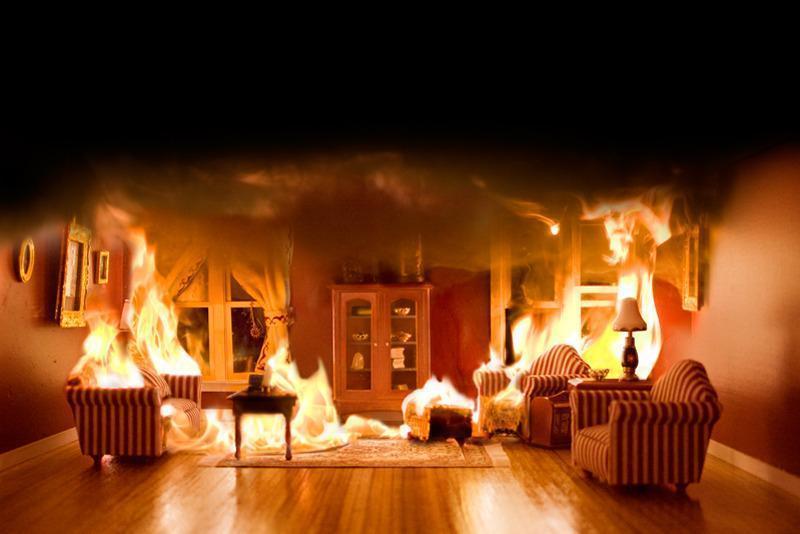
Protecting your home from fires
1. Check your smoke alarms
Smoke alarms provide an early warning in case of a fire inside your home. Traditional alarms beep when they detect smoke or fire, while smart detectors also send an alert to your phone. There should be a smoke detector in every room in your house except bathrooms, for maximum protection. You also need one in the hallway between the living area and bedrooms.
Crucially, you are highly advised to test your smoke alarms at least once a year to ensure they still work. You are four times more likely to die in a house fire without a functioning smoke alarm!
2. Get a fire extinguisher
Having a fire extinguisher handy can make the difference between a small kitchen mishap that was successfully contained, and the house literally burning down. There are different types of fire extinguisher, classified according to the kind of fire they’re designed to tackle. Make sure you are aware of what the differences are and how to use each one in an emergency situation. A typical home extinguisher should have an ABC rating:
• Class A – combustibles such as wood, paper, cloth, rubber, household rubbish, most plastics
• Class B – flammable liquids, solvents, oil, petrol, paints and lacquers
• Class C – gases including methane, propane, hydrogen, acetylene and natural gas
• Class D – combustible metals including magnesium and aluminium swarf
• Class E – Electrical fires
• Class F – chip pan fires, as an alternative to a fire blanket
3. Create a fire stopping landscape
A fire originating from outside, such as a wildfire, is best thwarted by preventing it from reaching your house in the first place. You can use landscape gardening design to slow down or stop the spread of fire towards your home, by adhering to these tips:
• Use hard landscaping such as concrete, stone or gravel around the house
• Clear any dry vegetation from around the home, particularly in the summer
• Use fire resistant plants such as lavender and honeysuckle for soft landscaping, and spread them out, to slow down fire and stop it from spreading
• Keep outdoor plants well watered during the summer months. Lush green planting is less likely to burn.
4. Use fire retardant materials
Let’s start with building materials; some are more vulnerable to fire than others. Using fire retardant alternatives and fireproofing your interiors are good first lines of defence against a potentially serious tragedy. Make the changes when you are refurbishing or redecorating your home. The Building.govt.nz website has a comprehensive list of everything you can do to help prevention of fire occurring. Designing for fire can also be designing for sustainability which is without a doubt a win-win!
When it comes to materials, concrete panels, stucco or brick for exterior walls, steel framing for windows and concrete or metal for roofing are all good choices. Fire retardant paint is also a good idea. For decking, concrete, tiles, stone or brick are better than wood.
Inside your home, choose fire resistant curtains and upholstery fabrics. Additional flameproofing can also be administered to your existing home fabrics and upholstered furniture in situ. Curtain Clean can service your existing upholstery anywhere in the country. Call us on 0800 579 0501 for prices and to find out more.

A Neighbourly Riddle! Don’t Overthink It… Or Do?😜
Do you think you know the answer? Simply 'Like' this post if you know the answer and the big reveal will be posted in the comments at 2pm on the day!
If you multiply this number by any other number, the answer will always be the same. What number is this?


'Invisible boy' Malachi was failed again and again until his brutal death
The torture and murder of 5-year-old Malachi Subecz is a “national disgrace” but changes made in the wake of his death will not prevent further killings in the future.
The damning view of Coroner Janet Anderson is revealed in a long-awaited 132-page report into one of New Zealand’s most shocking child-killings - the 2021 death of Malachi at the hands of his ‘caregiver’, Michaela Barriball.


Poll: As a customer, what do you think about automation?
The Press investigates the growing reliance on your unpaid labour.
Automation (or the “unpaid shift”) is often described as efficient ... but it tends to benefit employers more than consumers.
We want to know: What do you think about automation?
Are you for, or against?

-
9.6% For. Self-service is less frustrating and convenient.
-
43.5% I want to be able to choose.
-
46.9% Against. I want to deal with people.
 Loading…