




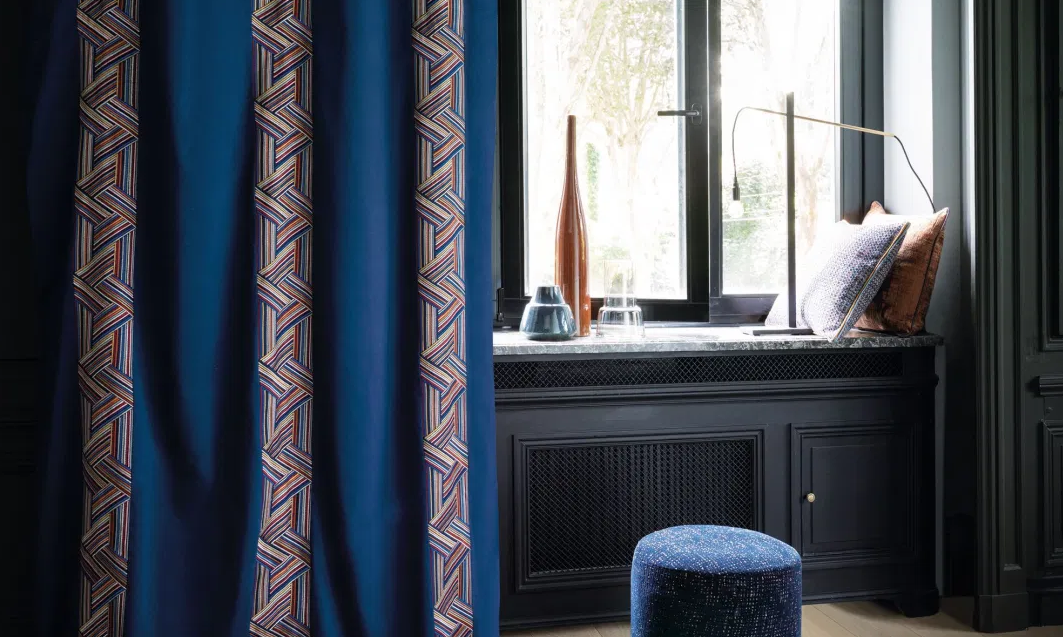
Unravelling textile testing - Colourfastness
Unravelling textile testing - Colourfastness
Colourfastness is one of four key topics (others include Abrasion Resistance, Pilling, Seam Slippage) that we are covering to provide some background as to how we test and why.
Test results provide us with critical information about textile’s durability and suitability for certain applications. We externally test all James Dunlop and Mokum textiles in Melbourne at a highly reputable laboratory who are amongst the most conservative and stringent in the world, due to the extremely harsh environmental conditions we face here in Australia and New Zealand.
We have gathered a number of frequently asked questions relating to colourfastness so we asked our Mokum studio designers Stephanie Moffitt and Annie Moir to share their expert knowledge.
One of the most important textile tests is that of colourfastness.
Simply put, a colourfastness test measures how well a textile will resist or withstand fading. Fading typically means a change in colour which may be a change in hue, depth or brightness of colour. We perform a range of different colourfastness tests when developing a new textile, we test its resistance to fading against UV light, as well as washing / dry cleaning and also rubbing.
Can you briefly outline the colourfastness to washing/ laundering test?
Colourfastness to washing and/or dry cleaning measures a fabrics ability to withstand fading or colour loss from laundering. The test replicates specific cleaning methods then measures any colour loss against a set of five grey scales, creating a result (1 being least colourfast and 5 being most colourfast). In this instance, a result of 4-5 is the result we strive for.
One question pops up a lot, if a product is machine washable can it be spot cleaned?
We would always approach spot cleaning with water or a cleaning product with caution. Most of our washable textiles are rating as delicate or gentle washing which means a delicate setting and we would prefer a delicate washing liquid. Whereas spot clean tends to be more localised and more aggressive. If spot clean is needed always first try a dry white clean cloth, to reduce any colour loss as this often can remove a stain.
Can you briefly outline the colourfastness to rubbing test?
Colourfastness to rubbing, or commonly known as ‘crocking’ measures fabric resistance to colour loss when subjected to rubbing or friction from another fabric. This is particularly relevant for upholstery textiles – you can imagine wearing white pants and sitting on a dark coloured sofa, you’d want to be confident that when you stand up your pants haven’t changed colour.
With this test, a white cloth is used as a standard abradant, and rubbed against the test fabric in both in both dry and wet conditions, with wet being more severe. Any colour transfer onto the white cloth, and colour loss from the test fabric is analysed and measured against a set of 5 grey scales (1 being least colourfast and 5 being most colourfast). The result we receive from the lab helps us to determine the recommended usage for the upholstery fabric.

Poll: Should we ditch daylight saving? 🕰️
First introduced in New Zealand in 1927 with the passing of the Summer Time Act, it's what we know as 'Daylight Saving' and this year it ends on the first Sunday in April.
While we do get to sleep in this time around, some people would like to scrap the clock tinkering for good.
And why? Some evidence suggests the time changes are bad for our health as they mess with sleep patterns leading to short-term fatigue and affecting mood. Meanwhile the hour change is frustrating for farmers and a nightmare for getting the littlies to sleep. But what's your take?

-
41.3% Yes - get rid of the clock changes
-
57.1% No, I enjoy it
-
1.6% Other - I'll share below

Don't overthink this riddle...
I have a silver sole
but no feet,
I make my living by bringing the heat.
What am I?
Do you think you know the answer? Simply 'Like' this post if you know the answer and the big reveal will be posted in the comments at 2pm on the day!
Want to stop seeing these in your newsfeed?
Head here and hover on the Following button on the top right of the page (and it will show Unfollow) and then click it. If it is giving you the option to Follow, then you've successfully unfollowed the Riddles page.

Incinerator
Hi does anyone have a garden incinerator they no longer need or would like to sell/give away? I need to burn some accounts/documents - or if anyone has any idea how to get rid of them apart from public recycling let me know - Thanks
 Loading…