






10 tips for successful decluttering
1. Don’t start what you can’t finish
It’s important to start decluttering when you’re in the right frame of mind to see it through until completion, says Katie. Often, this means enlisting the help of others, such as family, friends, or professionals like Moving On.
Decluttering requires a lot of energy. You’ll need to make many decisions, some small and large, so going into the process with a support team can make all the difference.
“Do it properly. You never put your clothes in the washing machine, put it on, and then leave them there for two days. So what you start, finish,”..
2. Tackle photographs and paperwork first
Katie suggests starting with the most important things: paperwork, photographs, and other essential documents. She advises storing these in plastic containers instead of cardboard boxes to minimise the risk of damage.
She also has some tips for the ongoing management of paperwork, as this is often the first type of clutter to quickly build up again.
Create a designated area for mail, for example a basket near your front door.
Set aside a time to sort through your mail every week – and stick to it! Do the same for your email inbox, as digital paperwork can take up a lot of mental space.
Recycle catalogues, magazines, and newspapers quickly. If you like a particular page or article, cut it out instead of keeping the whole booklet.
3. Fix a time
Set aside a specific time to declutter and give others at least a few weeks’ notice. As you’ll likely need plenty of help, inspire those involved to make a fun day out of it. Let them know you’ll provide food and good company. Be specific about when you need them to arrive and how long you think it will take.
“You need to say, listen, when are you available? These are the times we are going to work on the house. We’re going to do it on Saturday three weeks away, let’s start at 10 am, I’ll make a bacon and egg pie,”.
“The more convivial you can make it, the better. You need to get everyone inspired.”
4. Keep only what you use often
The aim of decluttering is to keep only what you use often. If you haven’t used something in the past year, Katie suggests asking yourself these questions:
Do you still need it?
Will you use it again?
Is it worth the space it’s taking up?
5. Stop storing other people’s stuff
“Any clutter you live with should not belong to others,” says Katie.
If you’re still storing other people’s stuff, it’s time to give it back to its rightful owners. It’s no longer your responsibility to hold on to family member’s belongings. Let them know you’re decluttering and give them a reasonable timeframe to collect their things.
6. Share the love
Once you have decided which items you’d like to let go of, look for places or people who might appreciate them.
“There’s so many things you can do with your belongings that can help someone else. I say to people all the time: share the love,” says Katie.
“People are generous. Most people have big hearts and want to share the love. If they’re not going to use it, they’d rather someone else used it. It’s a win-win.”
7. Use your crystal and china
If you have precious family heirlooms sitting in the back of a cupboard gathering dust, Katie believes now is the time to bring these out and enjoy them.
“All of these items were made to be loved,” she says.
If you don’t wish to use them, and your family don’t want them, then it’s better to sell them and buy something you will love to use. That way, another family can enjoy these precious items.
“The beautiful glasses, the china, the silver – use it. That’s my best advice I can give you,” says Katie.
8. Streamline your wardrobe
Katie once worked with a client who had over 50 pairs of black pants. It’s natural to accumulate multiple items of the same clothing over time (Katie says her weakness is white sneakers!). Decluttering is the perfect opportunity to streamline your wardrobe.
“If you haven’t worn it for two years, do you really want it? Maybe you should consider living without it,” advises Katie.
She has two suggestions for managing your wardrobe on an ongoing basis:
Don’t bring anything in unless you take something out.
Every time you wear something, turn the hanger the opposite way. Then in a month or two, assess the hangers to get an idea of what items you’ve actually put on.
9. Tackle your kitchen drawers
The kitchen is another place where clutter can build up quickly. It’s common for people to have four or five of the same thing, for example ladles, wooden spoons, peelers, can openers, and the like.
Katie suggests getting a little box and placing it on your bench. Every time you use something out of your utensil draw, pop it in that box. You’ll likely see that you reach for the same utensils over and over again, while others rarely see the light of day.
She advises keeping your favourites and giving away the rest. In the future, you can always borrow utensils you rarely use from a neighbour.
10. Fully commit to a decluttering routine
After your initial decluttering efforts – for example, to downsize and move into a smaller home or village – it’s important to try to commit to an ongoing decluttering routine. This will help to keep clutter to a minimum over the long term and avoid it building up again.
Katie has some great tips for managing clutter on an ongoing basis:
======================================================
Make sure everything has a designated home.
Start to put things away as you go.
Set aside time to sort through clutter every week.
It might take a few weeks to get into a regular routine, but it’s worth the effort. Living in a clutter-free, clean environment is great for your mood and makes life that much easier.
===============================================
Katie Fitzpatrick---Professional de-clutterer and moving specialist
==============================================
Why does New Zealand take such a long summer holiday break?
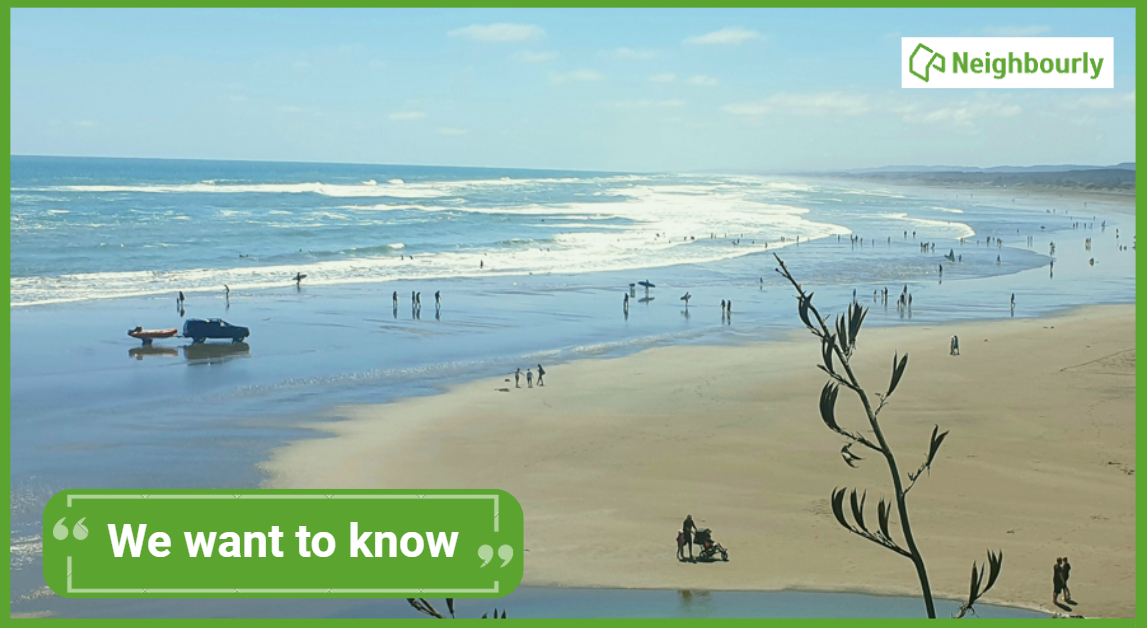
Most Kiwis are counting down the days until their summer holiday - whether they're heading off camping, heading to the bach or just taking a few lazy days at the beach.
But has it always been this way?
Richard Wolfe is a cultural historian and the author of more than 40 books about Aotearoa.
"Leaving town over Xmas and January has become a key part of the local cultural identity," Wolfe said.
The New Zealand History website, operated by the Ministry for Culture and Heritage, calls the summer lull an "end-of-year prize for being a New Zealander".
However, not everyone is 100 percent on board with our somewhat leisurely summer pause.
A post on LinkedIn by business adviser Toss Grumley went viral in the past week, as Grumley wrote that he was "baffled every year by New Zealand's intense Christmas shut down".
"In what world as an economy and country are we operating in an environment where no business discussion can happen for a period of ten weeks," he asked. His question sparked debates on news and social media sites.
On NewsTalk ZB on Monday, Prime Minister Christopher Luxon said he had spent much of his career working overseas where the long holiday break wasn't the same.
"In the US you maybe get two weeks' annual leave holiday and Christmas is a couple of days off and you're back at it again.
"I've always been used to going back to work on the 3rd or 4th of January," he said.
Auckland Business Chamber head Simon Bridges told Stuff : "There is a view that New Zealand just shuts down not just for Christmas and New Year, but in many cases, all the way through to March."
How did our long summer break become such a Kiwi institution, anyway?
===================================================
Wolfe said one of the big factors behind our long summer break is, well, the summer weather. Our Australian cousins benefit from that, too.
"I suggest that what's behind the 'summer break' is, fairly obviously, the local (antipodean) climate," he said.
Christmas in the Northern Hemisphere is in the middle of winter which isn't quite as conducive to long camping holidays and days at the beach.
And despite the image of an entire country putting on the brakes, not everyone in New Zealand actually takes off the entire summer until March.
"We want to shop, go to the movies or watch TV, and we expect everything to be available, so hospitals, power suppliers, the police and many other essential services still run 24/7," NZ History noted. "And if we live on a farm, then summer means more work, not holidays."
We also roll Christmas and New Year together with our "summer holiday," which places like America and Europe tend to do in August. There are also only a couple of public holidays between June and Christmas like Matariki and Labour Day.
One commenter wrote on Grumley's LinkedIn post that "people are exhausted by the end of the year" here in New Zealand, "so we shut down for a solid month".
Changing laws, changing transport
============================
Holidays as we think of them now are a fairly modern invention.
According to Te Ara the online encyclopedia of New Zealand, originally the two statutory holidays for Christmas and New Year's at the height of summer "provided a compelling reason" to take a break.
As far back as the 1860s even gold miners would take a break then, as Coromandel goldfields granted two weeks' special protections over claims.
The long holiday began to evolve over the 20th century thanks to tightening labour laws and the growth of wider travel with the introduction of the automobile and trains.
"Another important factor may have been the introduction of the Annual Holidays Act in 1944, making a two-week paid holiday a legal entitlement for full-time employers," Wolfe said.
Compared to some countries, Kiwis get a generous amount of paid leave time.
The latest version of the Holidays Act from 2003 entitles employees to at least four weeks of paid annual leave after 12 months of continuous work.
That's quite a contrast to, say, America, where there is no legally mandated paid holiday time.
New Zealand's geography and compact size meant the beach was the most likely place for labourers and their families to go.
"Because no part of the country is more than 120 km from the nearest coastline, the beach and associated baches became popular destinations," Wolfe said.
"I would suggest that the 'summer break' was established in the period of post-war prosperity in the 1950s, with the continuing growth in the number of privately owned cars, thereby increasing personal and family mobility."
But does a break really impact our economy?
====================================
In his opinion piece, Grumley claimed the long holiday affects New Zealand's productivity.
Not everyone agrees.
"Work less, live more," one commenter wrote in response to his post.
Fleur Fitzsimons, national secretary of the union Public Service Association, said holidays are important to workers.
"New Zealand has a culture of long hours, workers need more holidays to recharge, reconnect with their families and get ready for the working year ahead."
The government has announced changes to the Holidays Act, which would see both annual and sick leave accumulate based on hours worked. Unions and opposition parties have said they fear that could trample workers' rights and entitlements.
Fitzsimons said the government has been taking rights away from workers by cancelling pay equity and introducing changes to the Employment Relations Act, calling it "out of touch" with the needs of working New Zealanders.
"If the government is serious about improving productivity, cutting holidays is the wrong approach.
"We have a mental health crisis in New Zealand - the last thing we should be doing is talking about fewer holidays."
Wolfe said that the current summer break may help workers recharge their energy for the year ahead.
"A shorter break might in fact have the opposite effect - creating disgruntlement among workers who feel they're being short-changed," Wolfe said.
"And as climate change kicks in and the world gets warmer, perhaps the summer break will become vital for maintaining the health and welfare of New Zealanders."
======================================================

Poll: Are our Kiwi summer holidays helping us recharge, or holding the economy back? ☀️🥝
There’s growing debate about whether New Zealand’s extended Christmas break (and the slowdown that comes with it) affects productivity.
Tracy Watkins has weighed in ... now it’s your turn. What’s your take? 🤔
-
72.8% We work hard, we deserve a break!
-
17.2% Hmm, maybe?
-
10% Yes!

Some Choice News!
Many New Zealand gardens aren’t seeing as many monarch butterflies fluttering around their swan plants and flower beds these days — the hungry Asian paper wasp has been taking its toll.
Thanks to people like Alan Baldick, who’s made it his mission to protect the monarch, his neighbours still get to enjoy these beautiful butterflies in their own backyards.
Thinking about planting something to invite more butterflies, bees, and birds into your garden?
Thanks for your mahi, Alan! We hope this brings a smile!

 Loading…